Île aux Cerfs, Mauritius: The Complete Guide
Île aux Cerfs is a small island of white-sand beaches inside the largest lagoon of Mauritius, off the east coast near Trou d'Eau Douce. There is no bridge: you reach it by boat in about ten minutes, as a shuttle crossing or as the highlight of a full-day catamaran, speedboat or pirate-boat trip.
Where is Île aux Cerfs?
Next: How to get to Île aux CerfsÎle aux Cerfs sits just off the east coast of Mauritius, in the Flacq district, inside the biggest lagoon on the island. The nearest village on the mainland is Trou d'Eau Douce, a fishing village with a public jetty that has been the departure point for the island for as long as anyone can remember. Our family has been sailing from that jetty since 1995.
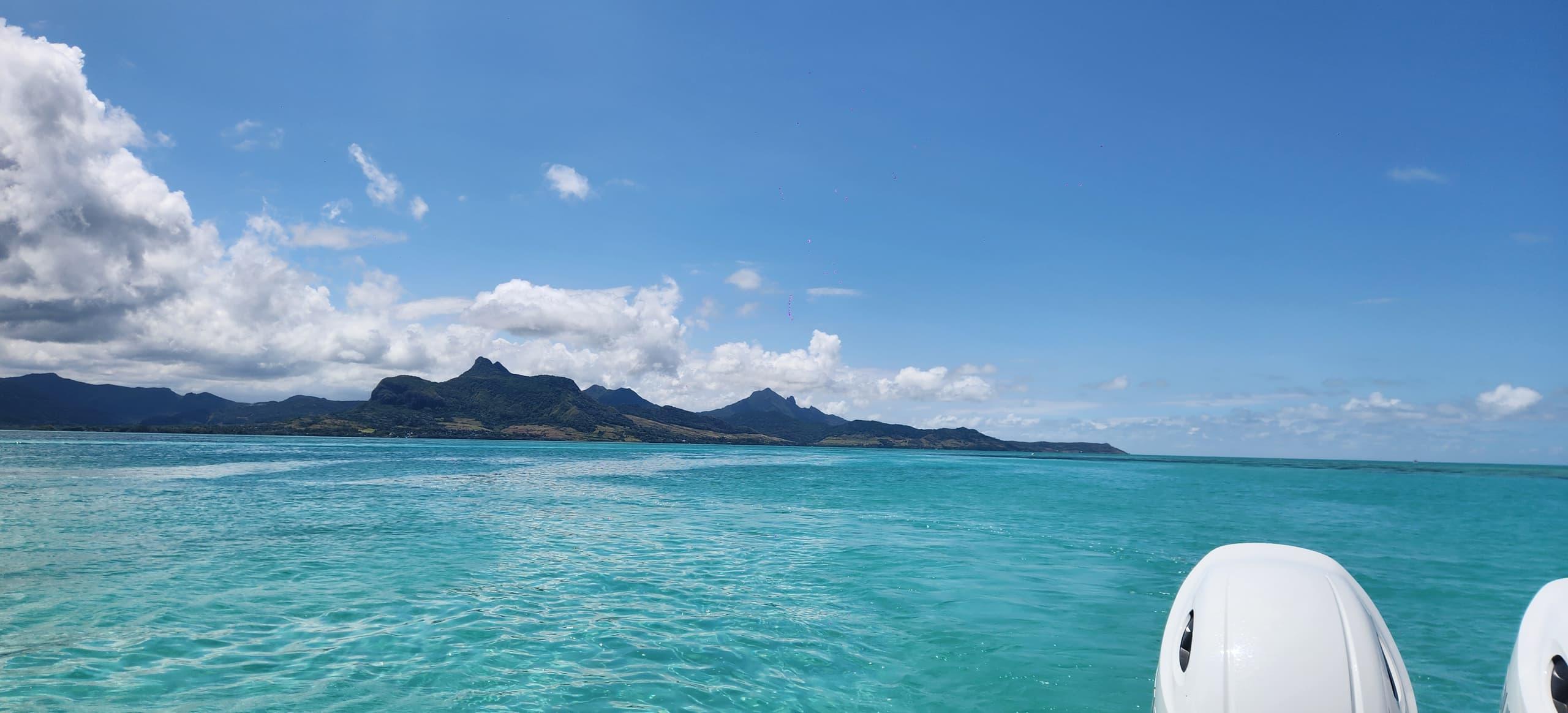
The island is roughly 87 hectares, low and flat, fringed with casuarina trees and ringed by sandbanks that appear and vanish with the tide. It is a day-trip island: there are no hotels on it, a golf course occupies its interior, and almost everyone who visits comes for the beaches on its northern and western shores.
From the airport in the south-east, Trou d'Eau Douce is about 45 minutes by car. From the northern resorts around Grand Baie, allow an hour and a quarter; from the west coast around Flic en Flac, closer to an hour and a half. Most of our guests either drive themselves to the jetty or book a hotel pick-up.
How to get to Île aux Cerfs
Next: The beachesThere is exactly one way onto the island: by boat. The question is which boat, and that choice shapes your whole day. The crossing itself is short, so the difference between the options is not the ten minutes on the water but everything that happens before and after.
From Trou d'Eau Douce, the departure point
Trou d'Eau Douce is where the shuttles, the catamarans and the speedboats all leave from. The public jetty is signposted as the Débarcadère, on the Route Royale through the village, with parking nearby. Operators gather here from early morning; shared trips cast off around nine, when the lagoon is at its calmest and the light is at its best.
If you arrive without a booking you will be offered a crossing within minutes, but you will pay whatever the jetty asks that day and you will not know who is skippering. If you have a booking, your crew will be waiting with your name on a list, which is a calmer way to start a day on the water.
Ferry versus speedboat versus catamaran versus private charter
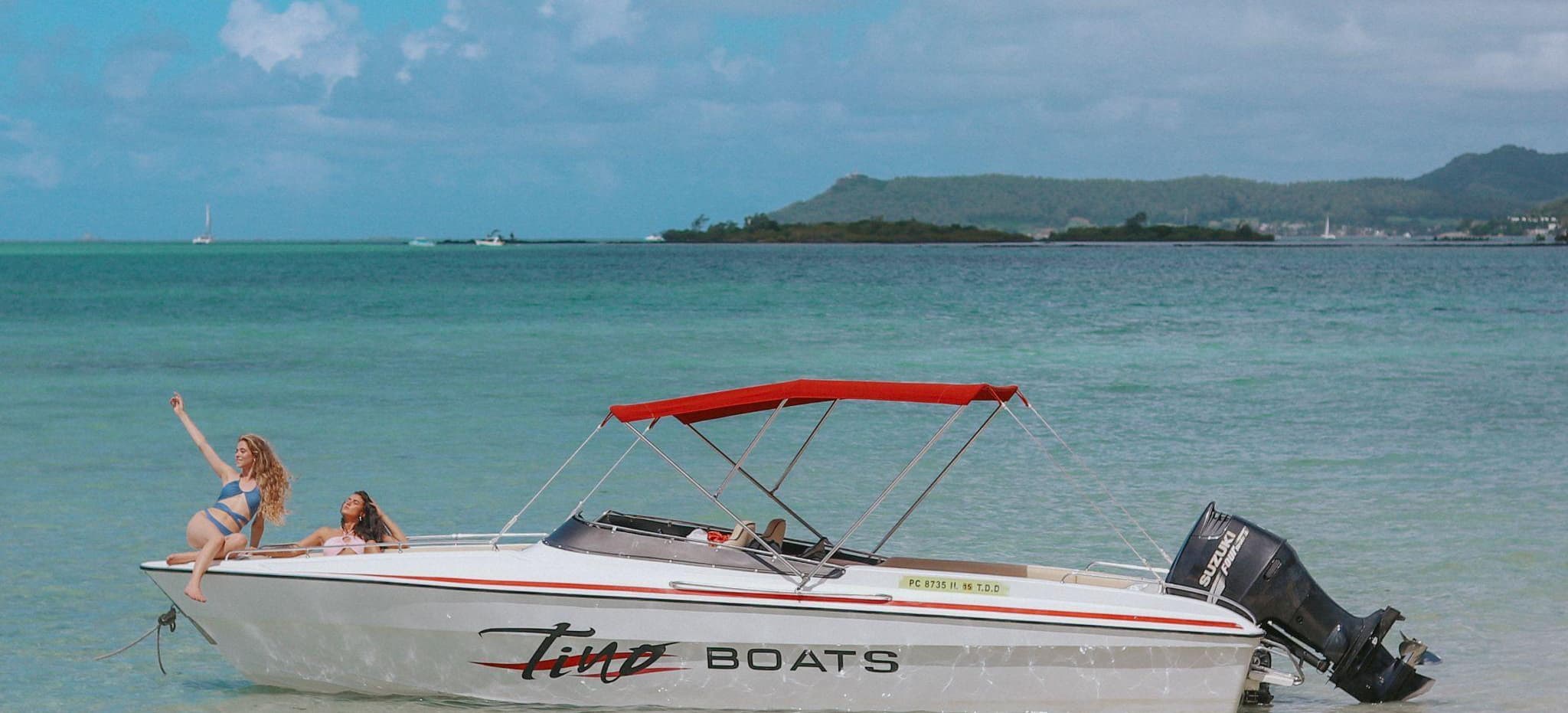
A shuttle (what most people mean by the Île aux Cerfs ferry) is a small open boat that takes you straight across and brings you back at an agreed time. It is the cheapest option and the least comfortable, and it includes nothing but the ride. You reach the busiest beach, right by the arrival pontoons, and you organise your own lunch and activities.
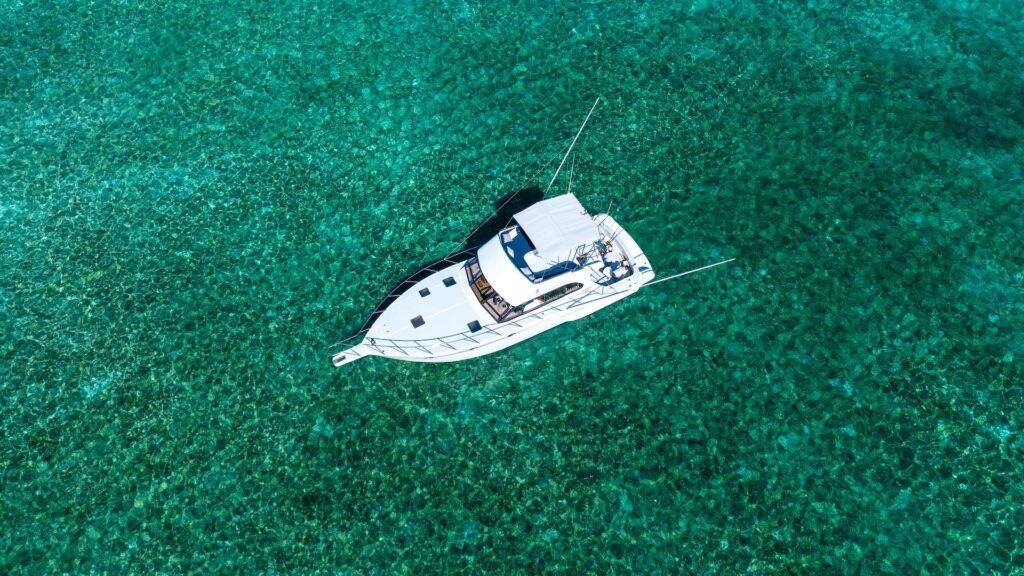
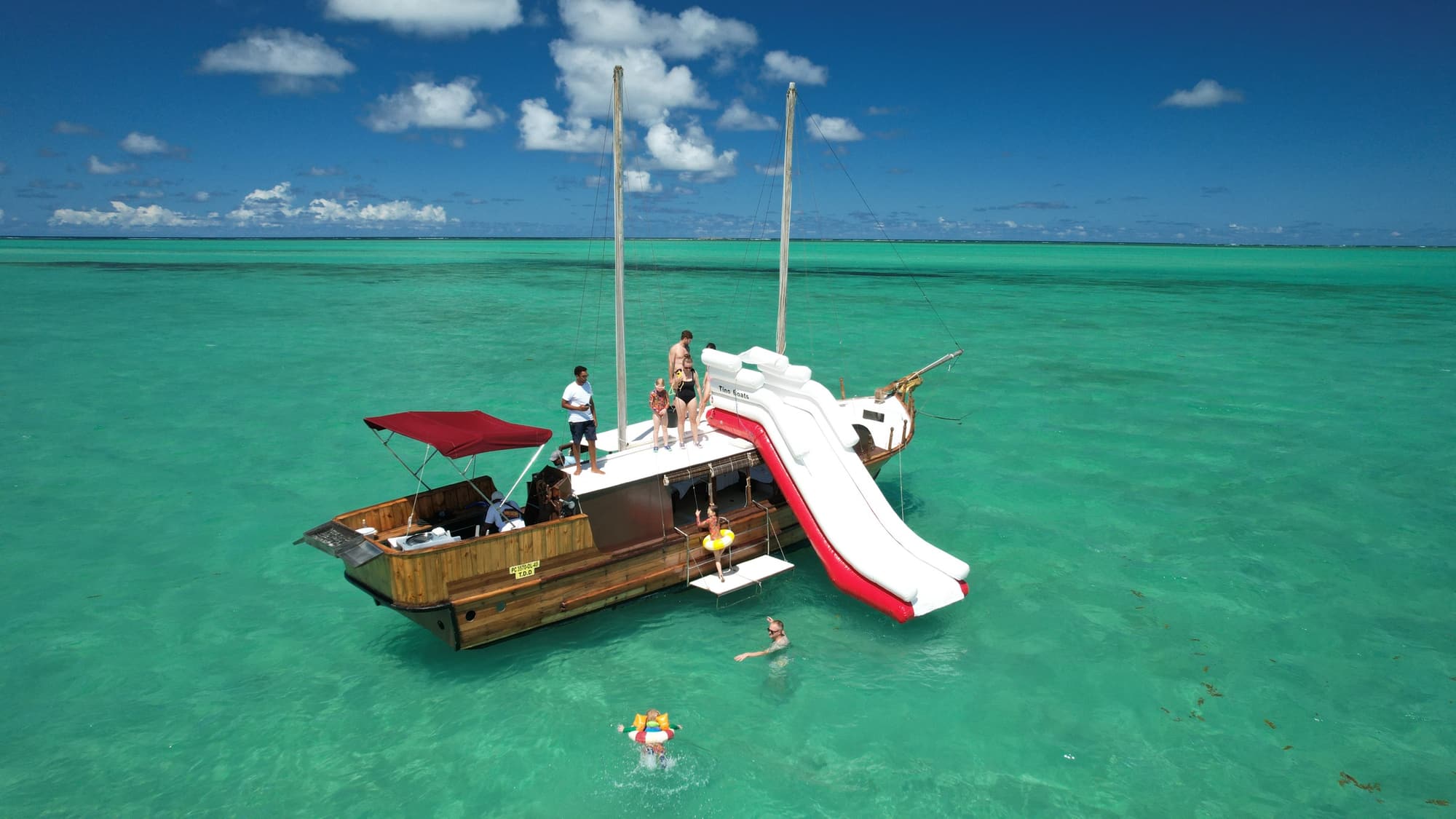
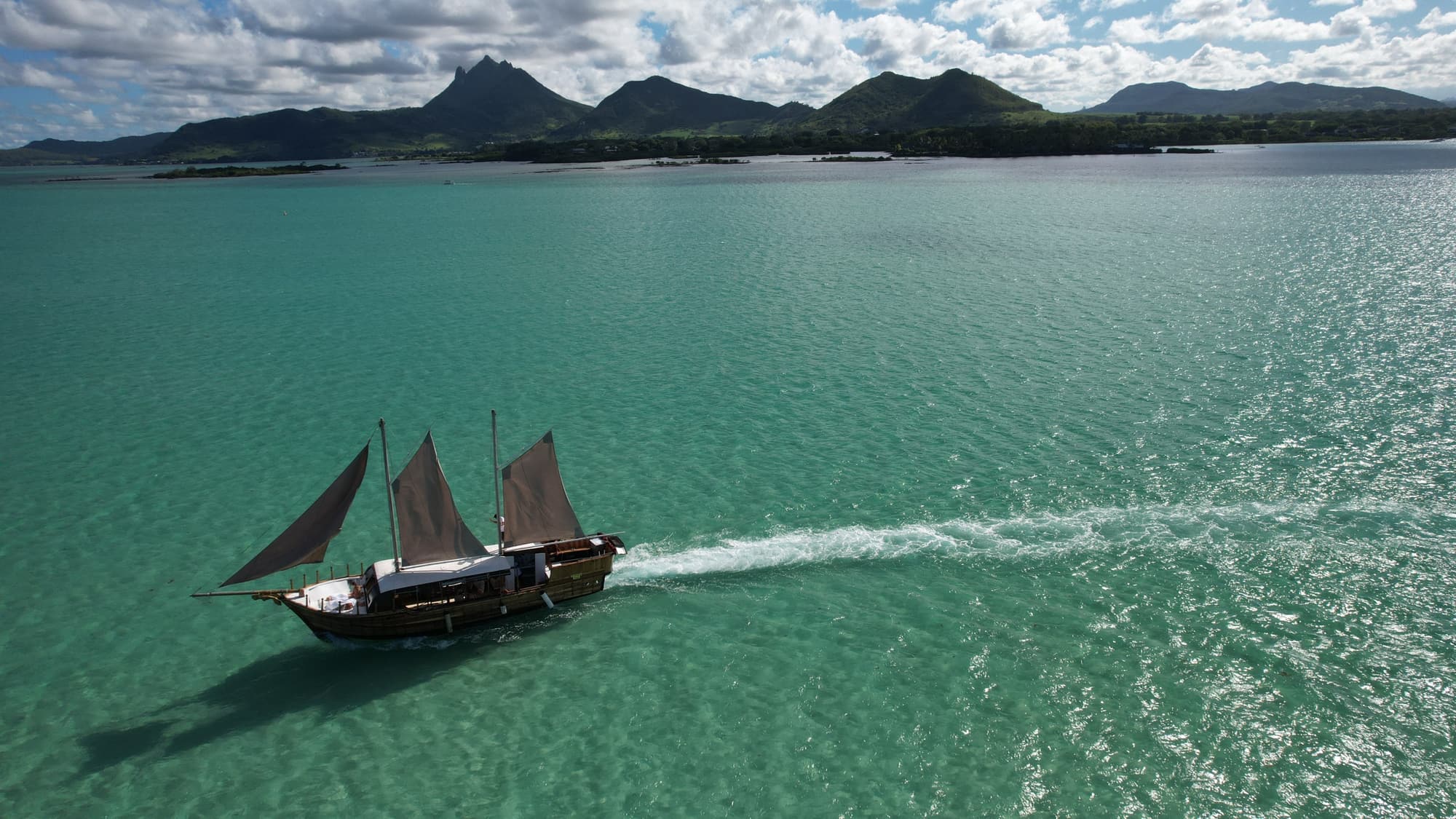
A full-day trip treats the island as the finale rather than the destination. A speedboat day goes straight to the island, serves lunch on the quiet beach at its back, and calls at the GRSE waterfall on the way home. A catamaran takes the slower, roomier route under sail, adds a snorkelling stop at the reef, and grills a barbecue on deck with an open bar. The Sirène d'Or, our wooden pirate boat, adds live music and a waterslide straight off the deck into the lagoon. A private charter is any of these boats for your own group, on your own timetable.
What it costs
| Option | Typical price | Duration | What is included | Best for |
|---|---|---|---|---|
| Shuttle boat (the ferry) | Agreed at the jetty, roughly Rs 500 to Rs 1,000 per person return | 10 minutes each way | The crossing only | A quick beach visit on a budget |
| Shared speedboat day | From Rs 2,000 per person | Full day, 09:00 to 15:00 | Waterfall, lunch on the beach, soft drinks | Couples and small groups who want the whole coast |
| Shared catamaran cruise | From Rs 2,500 per person | Full day, 09:00 to 16:00 | Waterfall, snorkelling gear, BBQ lunch on board, open bar | The classic, relaxed version of the day |
| Sirène d'Or pirate boat | From Rs 2,500 per person | About 6.5 hours | BBQ, unlimited drinks, live music, the waterslide | Families and groups who want fun on board |
| Private speedboat | From Rs 15,000 per boat (up to 4) | Full day | Your own skipper and route | Privacy without the catamaran price |
| Private catamaran | From Rs 50,000 per boat (up to 10) | Full day | Crew, BBQ, open bar, your own timetable | Celebrations and larger groups |
Tino Boats prices as published on our trip pages. Hotel pick-up is available from anywhere in Mauritius; the price depends on the distance from Trou d'Eau Douce: Rs 2,500 per car from East Coast hotels, Rs 5,000 from elsewhere (one to four people).
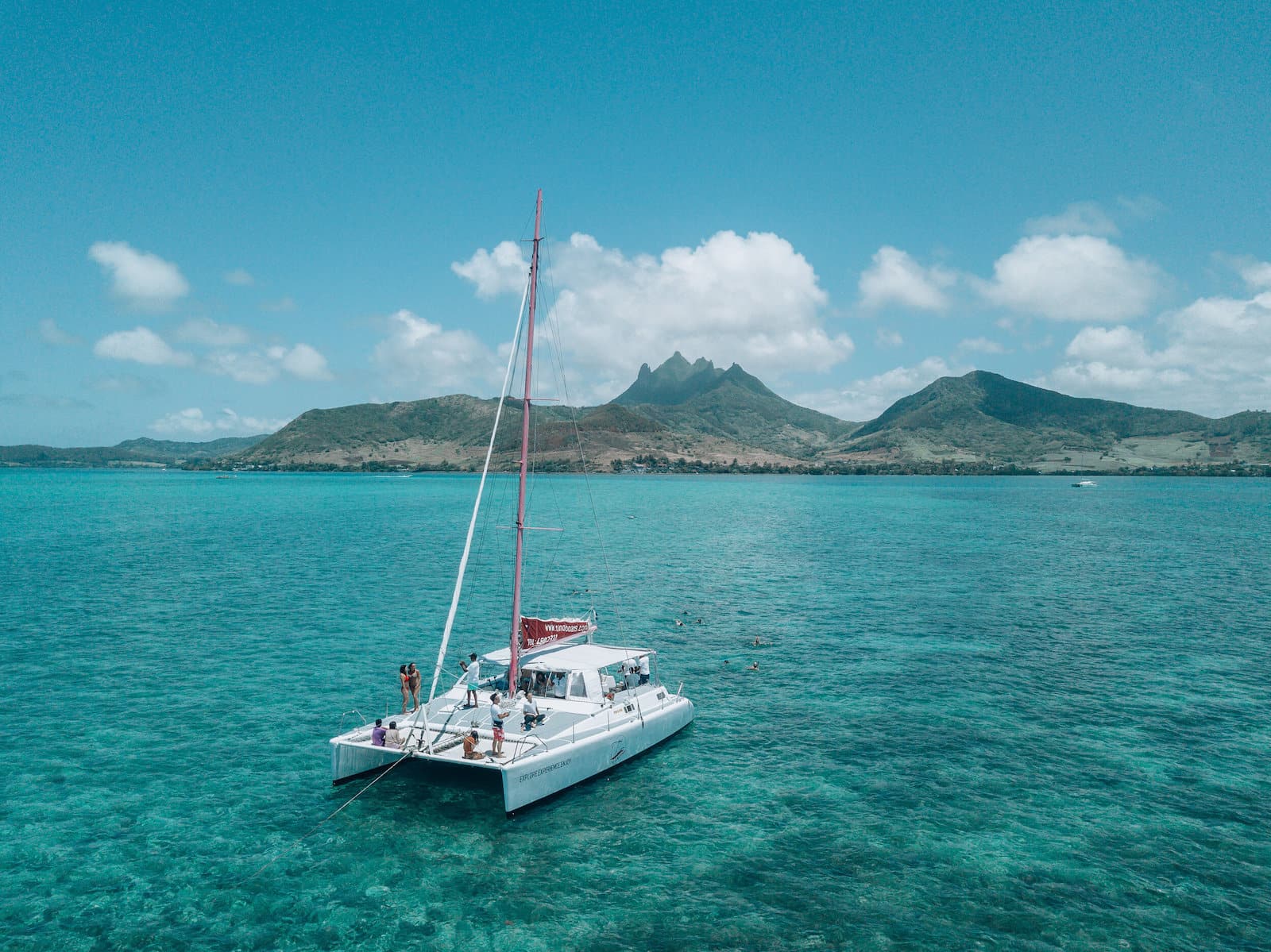
Catamaran Cruise to Île aux Cerfs
Jump on board our large and spacious catamaran and enjoy a refreshing, relaxing day cruising on turquoise water. Snorkelling • The GRSE waterfall • BBQ lunch on board • Île aux Cerfs.
The beaches
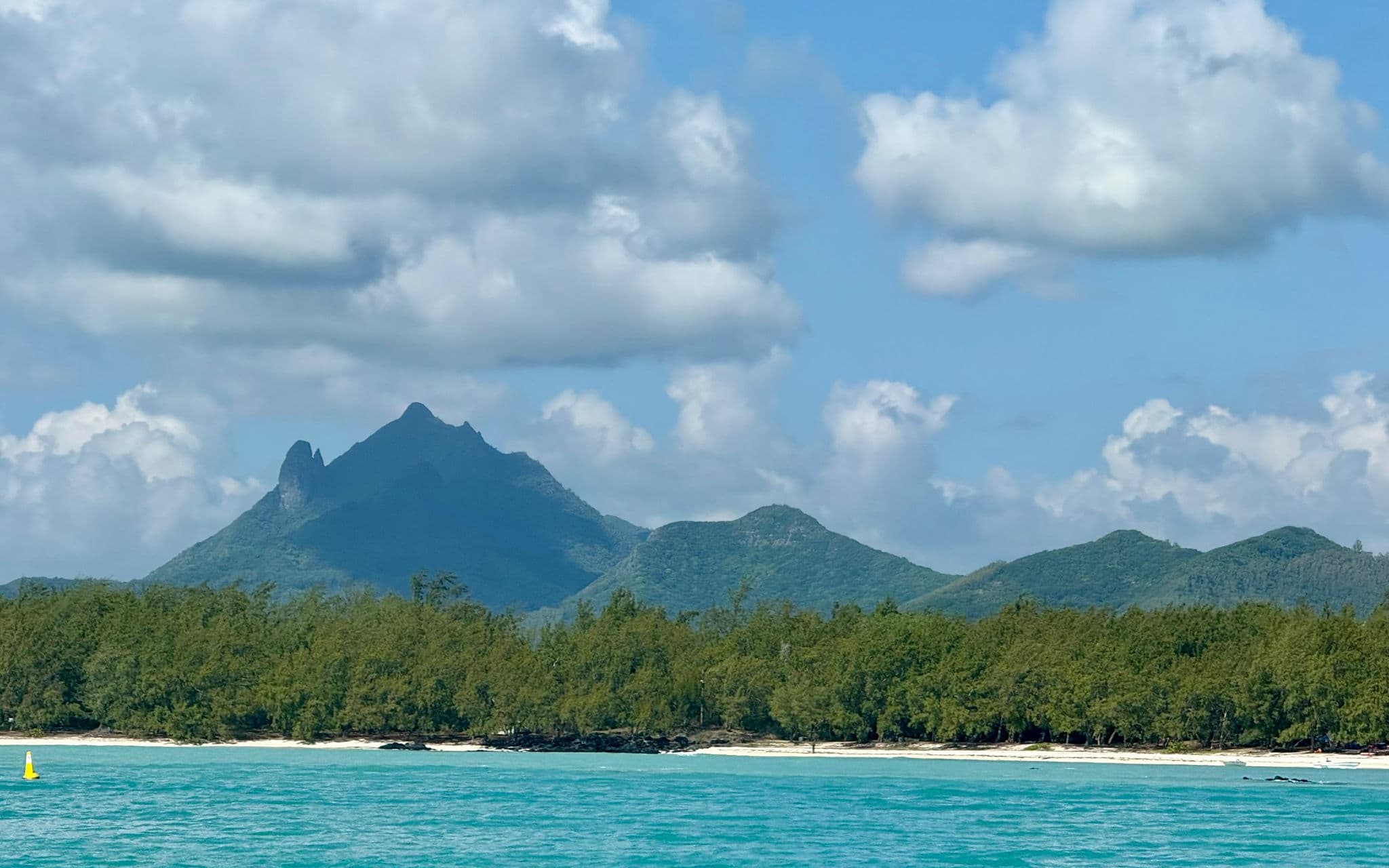
Next: Things to do on and around the islandThe beach you land on is the famous one: a wide crescent of white sand facing the mainland, shallow for a long way out, with restaurants, loungers and the watersports counters behind it. It is beautiful and, by late morning, busy. This is where the shuttles drop and collect, and where most organised tours anchor.
Walk ten or fifteen minutes along the shore to the east and the crowd thins quickly. The sand continues in a series of smaller coves separated by rocks and casuarinas, the water stays knee-deep and clear, and at low tide sandbanks appear a short wade offshore where you can stand in the middle of the lagoon. Boats with their own crew, ours included, often anchor at these quieter stretches rather than at the main pontoons.
The sea here is lagoon water: calm, warm and protected by the reef a kilometre or two out. Children can paddle safely, and it is one of the easiest places in Mauritius for a nervous swimmer to get comfortable. Shade is limited to the trees, so a hat matters more than you expect.
Things to do on and around the island
Next: Where to eatSnorkelling the reef
The best snorkelling is not at the beach but out at the reef, where the lagoon meets deeper water. The spot we have used for thirty years is shallow enough for beginners, sheltered from the swell, and busy with parrotfish, butterflyfish, trumpetfish and the occasional sea turtle. Full-day trips stop here before the island, with masks, snorkels and fins provided and a crew member in the water with you. We cover the whole subject in our guide to snorkelling in Mauritius.
The GRSE waterfall
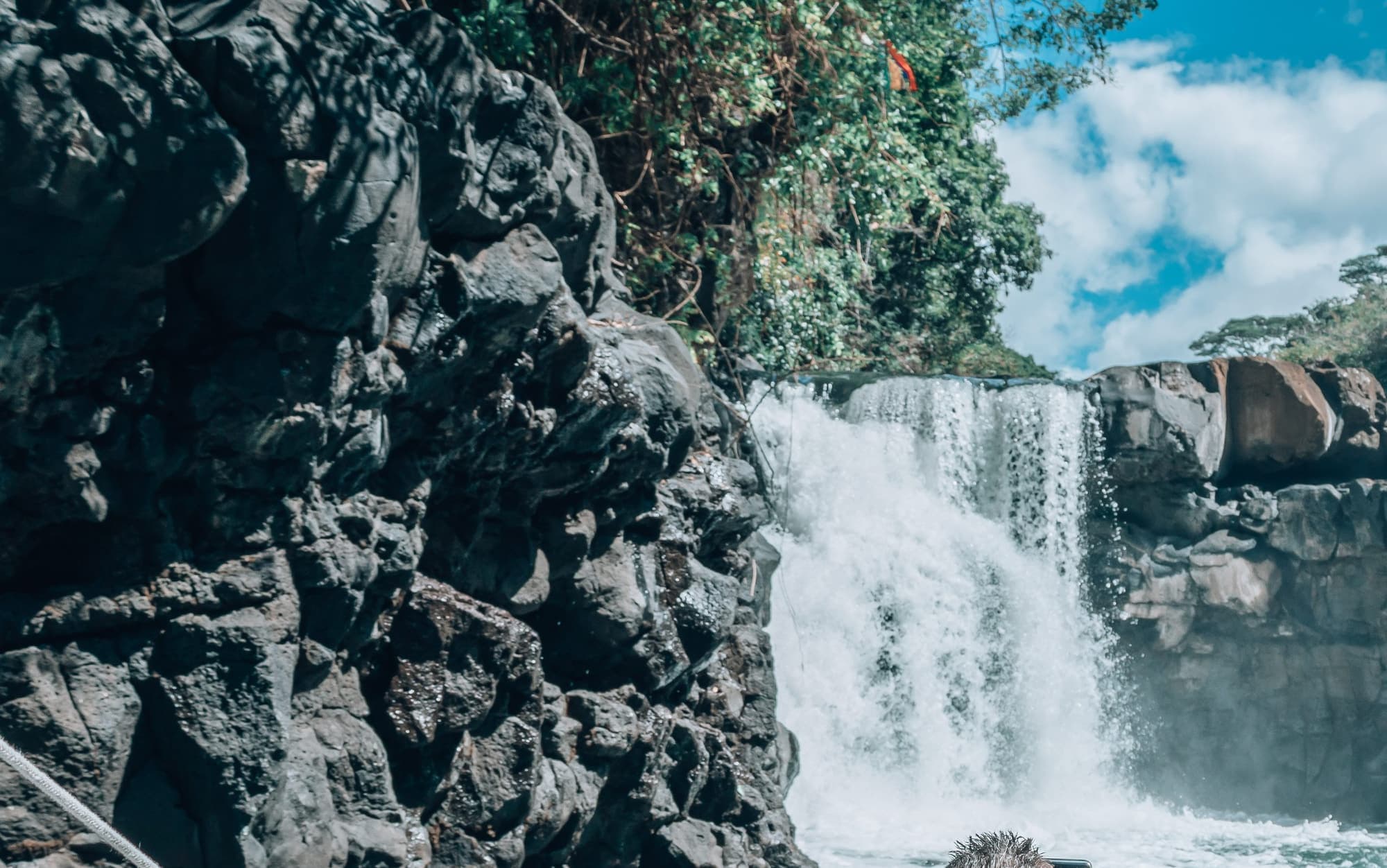
The Grande Rivière Sud-Est, the longest river in Mauritius, meets the sea a short run south of Trou d'Eau Douce. Boats can nose a little way up the river mouth between green cliffs to the waterfall at its head. It is modest in height but dramatic in its setting, and the macaques in the trees usually come down to watch the boats. It is the first stop on most full-day trips and the reason to leave the jetty at nine rather than noon.
Watersports and parasailing
The main beach has counters for parasailing, banana boats, tube rides, water-skiing and speedboat spins, all paid for on the spot in rupees or by card. Parasailing is the one most people remember: ten minutes above the lagoon with the whole east coast laid out below. If you are on one of our trips, we can arrange it in advance for Rs 3,000 for a couple so you are not negotiating on the sand.
The golf course
The interior of the island is an 18-hole championship course designed by Bernhard Langer, with fairways that run along the water and over mangrove inlets. It is operated by the resort group that manages the island, and tee times, club hire and the golfers' boat transfer are booked through them rather than through boat operators.
Where to eat
Next: Best time to visitOn the island there is a handful of restaurants and beach bars run by the resort group near the main beach, from grills to a more formal lunch, plus local stalls selling barbecue plates, fresh fruit and coconuts. Expect resort prices at the restaurants and village prices at the stalls.
Most people on a full-day trip do not need any of it, because lunch is part of the day. On our catamaran it is a barbecue of chicken, fish and sausages with salads, grilled on deck while we sail, with soft drinks, beer and rum on the open bar. On the speedboat and 5 Island trips lunch is served on the beach at Île aux Cerfs itself. If you cross by shuttle, bring water at least: the island shop prices reflect the boat ride everything took to get there.

Best time to visit
Next: Is Île aux Cerfs worth it?The lagoon is swimmable all year, so the question is really about wind and rain. From October to April the water is at its warmest and the east coast is at its calmest in the mornings, which is why that stretch is the peak season. January to March is also the cyclone season; actual cyclones are rare, but a few days of heavy rain are not, and trips are rescheduled for safety when the forecast says so.
From June to September the south-east trade winds blow steadily onto this coast. Mornings are still fine for the crossing and the island is quieter and cooler, but afternoons can be choppy outside the sheltered spots, and the snorkelling is clearer in the morning. Whatever the month, be at the jetty for nine: the sea is flattest, the light is softest and the beach is yours for an hour before the shuttles arrive.
Be at the jetty for nine. The sea is flattest, the light is softest, and the beach is yours for an hour before the shuttles arrive.
What we tell every guest who asks when to go
Is Île aux Cerfs worth it?
Next: Frequently asked questionsHonestly, it depends on how you go. Crossed by shuttle at midday and spent on the busiest fifty metres of beach, it can feel like a crowded postcard. Reached by boat after a morning at the waterfall and the reef, with lunch already handled and the afternoon free on a quieter stretch of sand, it is the best day most of our guests have in Mauritius, and they have been telling us so for three decades.
If you have one boat day on the east coast, make it a full one. The island is the reward at the end of it, not the whole point.
A birthday trip to Île aux Cerfs
Real guests, real smiles, one great day.
Frequently asked questions
The questions guests ask us at the jetty, answered the way we answer them there.
How do you get to Île aux Cerfs?
Only by boat, from Trou d'Eau Douce on the east coast. You can take a shuttle boat straight across in about ten minutes, or join a full-day catamaran, speedboat or pirate-boat trip that visits the GRSE waterfall and a snorkelling spot before landing on the island. There is no bridge or public ferry timetable.
How much does the Île aux Cerfs ferry cost?
Shuttle crossings are priced at the jetty and vary by season, roughly Rs 500 to Rs 1,000 per person return. Agree the fare and the return time before you board. Full-day trips that include the crossing, the waterfall, snorkelling gear and lunch start from Rs 2,000 per person with Tino Boats.
Is Île aux Cerfs free to visit?
Yes. There is no landing or entrance fee for the island. You pay for the boat that takes you there and for anything you buy or do once you arrive, such as lunch, loungers or parasailing.
How long should you spend on Île aux Cerfs?
Two to three hours on the beach is plenty for most people, which is why the island works best as the final stop of a full day that also covers the waterfall and the reef. Full-day trips run from 09:00 to 16:00 and typically reach the island after lunch.
Can you snorkel at Île aux Cerfs?
You can paddle with a mask off the beach, but the real snorkelling is at the reef on the way, where the lagoon meets deeper water. Full-day trips stop there with equipment provided; shuttle boats do not.
Is there a waterfall on Île aux Cerfs?
The waterfall is not on the island but on the mainland nearby, at the mouth of the Grande Rivière Sud-Est (GRSE). Boats visit it on the way to the island; it is the first stop on most full-day trips from Trou d'Eau Douce.
Are there restaurants on Île aux Cerfs?
Yes, a few resort-run restaurants and beach bars near the main beach, plus local barbecue and fruit stalls. On a full-day trip lunch is included, served on board the catamaran or on the beach, so you will not need them.
What is the best time of year to visit Île aux Cerfs?
October to April for the warmest, calmest water. June to September is cooler and breezier on the east coast but quieter. In every season, morning departures give the flattest sea and the emptiest beach.